

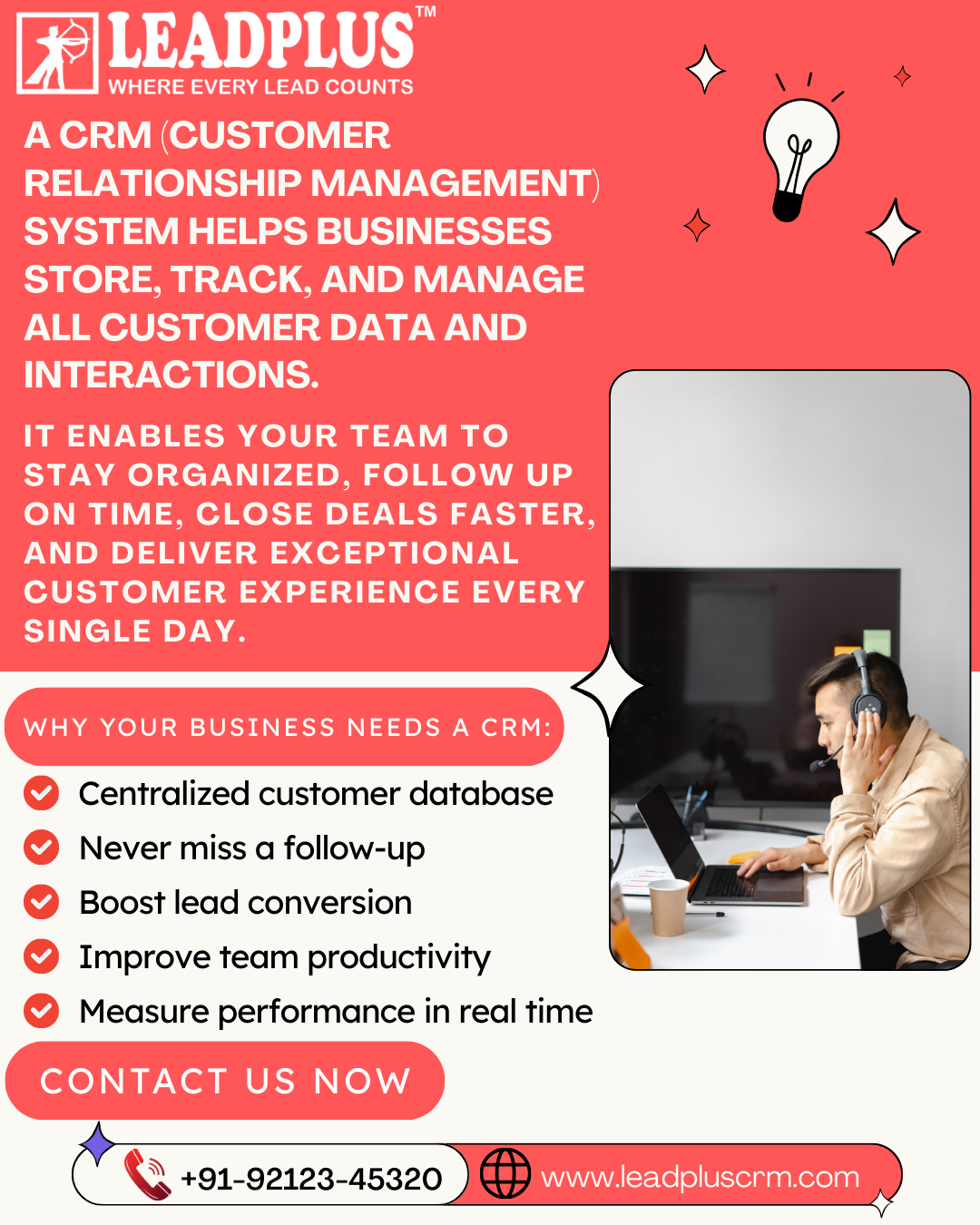
What Is a CRM and Why Every Business Needs The Ultimate Guide to Customer Relationship Management
The business world today is saturated-drowned, even in data. We collect, store, and analyze information on everything from website clicks to quarterly earnings. But there is one category of data-one crucial asset-that stands above all others: Customer Data. This is where the concept of Customer Relationship Management, or CRM, steps in. You might have heard the term CRM thrown around in sales meetings or seen ads for complex software. But what exactly is a CRM, and why has it become an indispensable tool non-negotiable requirement for companies ranging from a two-person startup to a global enterprise? This isn't just about software; it’s about a strategy-a customer-centric philosophy that drives sustainable, long-term growth. A Customer Relationship Management system is, at its core, a single, shared digital location-a centralized hub-where a company stores, organizes, and manages all its interactions with both current and prospective customers. Think of it this way: without a CRM, your customer information is scattered. Leads are in a spreadsheet-a shaky, error-prone place-sales notes are in a notebook, support tickets are in an inbox, and follow-up reminders are stuck to a monitor with a sticky note. A CRM system gathers these disparate threads-the whole tapestry of the customer journey-into one cohesive, accessible platform. The three primary components of a CRM are: The Database: This is the unified record of every contact, known as a "360-degree view" of the customer. It logs names, email addresses, job titles, communication history, purchase records, and even social media activity. It’s the truth-teller of your customer universe. The Process Automation: CRMs automate mundane, repetitive tasks-sending follow-up emails, scheduling appointments, logging phone calls-freeing your sales team to focus on what matters most: selling. This is where efficiency truly takes flight. The Analytical Tool: CRMs provide dashboards and reports that analyze customer data to give you actionable insights. Which leads are "hot"? Which campaigns are failing? Where is the bottleneck in the sales pipeline? The CRM answers these questions quickly, definitively, and without bias. Simply put, a CRM is the technology that supports the CRM Strategy business methodology focused on improving interactions with customers to drive revenue and foster loyalty. The argument for a CRM isn't about mere convenience; it’s about survival and scaling. Here are the primary benefits that transition the CRM from a "nice-to-have" tool to a "must-have" business necessity. Imagine a customer-let's call her Sarah-who calls in with a question. Without a CRM, the support agent has no idea that Sarah just got off a difficult call with a salesperson, or that she’s a VIP client with a large, recent purchase. The support agent has to ask frustrating, redundant questions-a common point of customer friction. With a CRM, every employee-from marketing to sales to support-sees Sarah’s complete history instantaneously. This unified view ensures every interaction is personalized, informed, and efficient-the kind of service that screams professionalism and care. It eliminates the dreaded, "Let me check with a colleague..." pause. Sales teams thrive on organization and speed-two areas where a CRM dominates. Lead Scoring and Nurturing: CRMs automatically score leads based on their engagement (website visits, email opens, downloaded resources). This means sales reps stop wasting time on "cold" leads and focus their energy-their precious selling hours-on the leads most likely to convert right now. Pipeline Visibility: The sales pipeline is visually mapped out in the CRM. Reps can see exactly where a deal is-from "Prospecting" to "Negotiation" to "Closed-Won." Management gains instant forecasting capability, eliminating guesswork and replacing it with data-driven confidence. Never Miss a Follow-up: A lost deal is often simply a forgotten follow-up. CRMs provide automated reminders and task assignments, ensuring no lead potential revenue slips through the cracks. They make sure the right rep calls the right person at the right time. In the experience economy, the product is often secondary to the experience. Customers expect hyper-personalization-they want you to know their preferences, their history, and their pain points before they even finish speaking. A CRM makes this personalization possible at scale. By tracking every touchpoint-the customer’s preferred communication channel, past complaints, or even birthday-you can tailor your messaging, offers, and support. This isn’t just good service; it’s the foundation of customer loyalty. Why blast a generic email to your entire contact list when only a fraction of them are relevant? A CRM allows marketing teams to segment audiences with surgical precision. Need to target customers who bought Product X six months ago but haven't bought Product Y? The CRM filters the data in seconds. This ensures marketing budgets are spent effectively, campaigns feel relevant to the recipient, and the return on investment (ROI) is maximized clear win for the bottom line. Acquiring a new customer is exponentially more expensive, estimates say five times more expensive than retaining an existing one. Retention is the secret weapon of profitable companies. CRMs excel at retention by helping you identify at-risk customers, automate check-in messages after a sale, and track customer satisfaction scores (CSAT or NPS). When issues arise-and they inevitably the CRM ensures they are handled swiftly and professionally, turning a potential complaint into a powerful loyalty opportunity kind of turnaround that builds trust. While the large corporations have complex, custom-built systems, the modern CRM landscape offers powerful, affordable solutions for everyone. For SMBs, the CRM is an organizational powerhouse. It replaces whiteboards, Post-it notes, and dozens of disparate spreadsheets. It provides the sales efficiency and professional image of a large company without the massive overhead. Key benefits for SMBs include: Scalability: The CRM grows with you-you don't need to rebuild your customer data system every time you hire a new employee or launch a new product. Time-Saving: Automation is critical when every employee wears multiple hats. The CRM handles administrative tasks so your small team can focus on revenue generation. Affordability: Most major CRM providers offer tiered pricing-starting with free or low-cost plans-making the technology accessible to every budget. For enterprises, the CRM manages complexity and integration. It acts as the operational nervous system, integrating with ERP (Enterprise Resource Planning) and other legacy systems. Enterprise CRM benefits focus on: Global Standardization: Ensuring a consistent, high-quality customer experience across all geographic regions and business units-a monumental task without centralized data. Advanced Analytics: Using AI and Machine Learning-the cutting edge of data science-to predict customer churn, optimize pricing, and identify new market opportunities. Regulatory Compliance: CRMs help ensure compliance with data protection laws-GDPR, CCPA, and others-by securely managing and documenting customer consent and privacy preferences In a world where price comparisons are a click away, the one true sustainable competitive advantage is the relationship you build with your customers. A CRM is not merely a tool for logging calls-it’s an investment in your company’s future revenue and reputation. It transforms a scattered, reactive business operation into a streamlined, proactive, and customer-obsessed growth engine. It ensures that every single interaction-every email, every call, every purchase meaningful, memorable, and mutually beneficial. If you are a business owner, a sales manager, or a marketing executive, the question is not if you need a CRM, but when you will implement, and the answer, unequivocally, should be now. Get the right system in place, commit to the customer-centric strategy, and watch your business not just survive, but thrive-outperforming competitors by simply knowing your audience better than anyone else.Part I: Defining the Indispensable-What Exactly Is a CRM?
Part II: The 'Why'-Why Every Business Needs a CRM
1. Centralized Data for a Unified Team
2. Supercharging Sales and Lead Management
3. Mastering the Customer Experience (CX)
4. Data-Driven Marketing and Targeted Campaigns
5. Boosting Customer Retention and Loyalty
Part III: CRM for Every Stage and Size
CRM for Small to Mid-Sized Businesses (SMBs)
CRM for Enterprise Corporations
Part IV: The Future is Relationship-Driven