

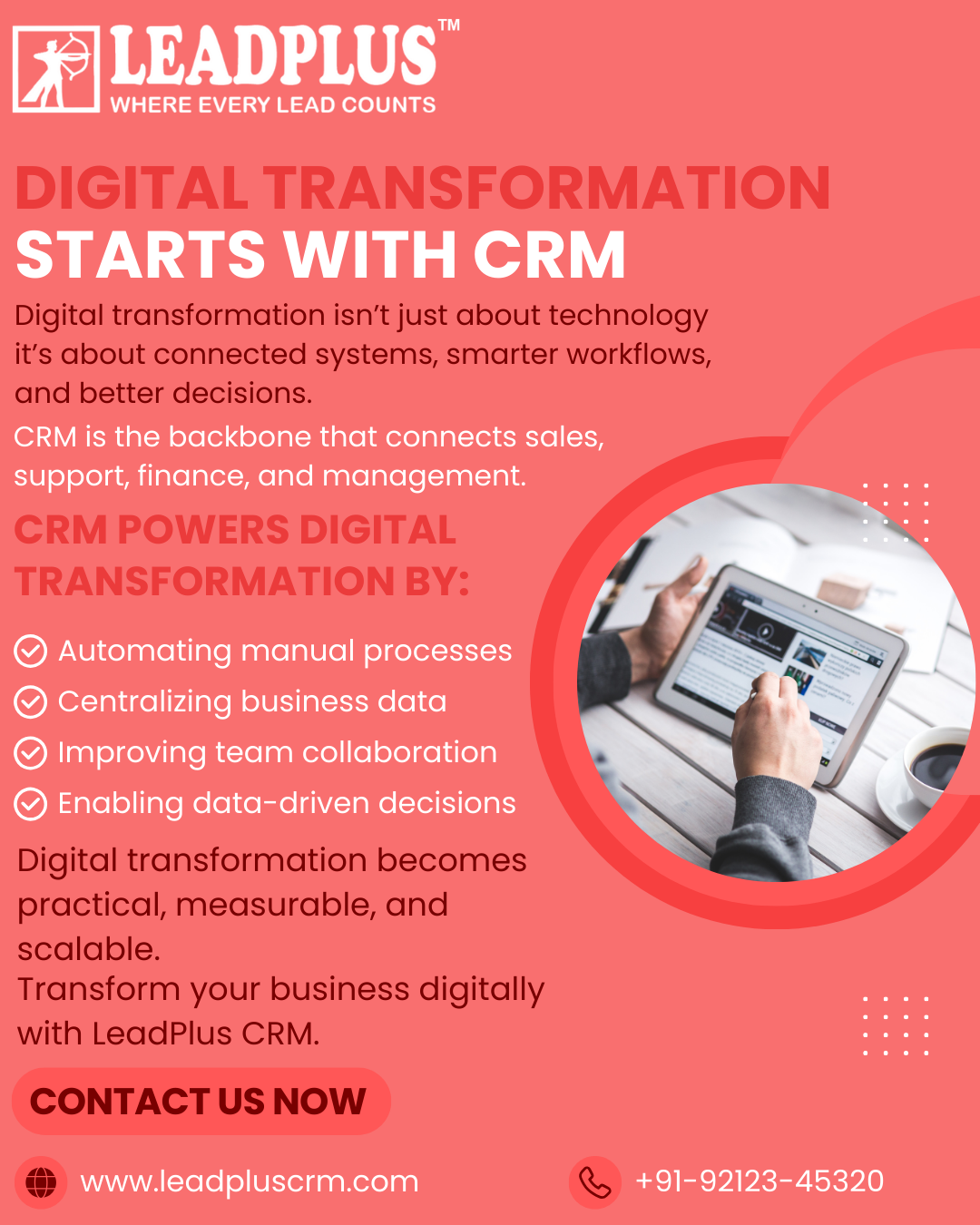
The Digital Backbone: How CRM Drives Modern Business Transformation
Digitaltransformation involves rethinking operating models to better meet the needs ofthe digital age. It aims to streamline processes, reduce inefficiencies, andbreak down organizational silos. LeadPlus CRM serves as a centralized platformthat facilitates these changes by providing a "single source of truth"for all customer-related data.
1. Streamlining Processes Through Automation
Acritical part of transformation is automating repetitive administrative tasksto free up teams for high-value activities.
- Lead Management at Scale: Instead of manual entry, businesses can use bulk operations to effortlessly upload large volumes of leads with just a few clicks.
- Smart Record Maintenance: Teams can update bulk contact fields such as status or custom fields across selected data groups instantly, ensuring data stays accurate without manual labor.
- Workflow Integration: Automation in the CRM ensures follow-ups are never missed, which directly impacts the bottom line by increasing productivity.
2. Modernizing the Sales-to-Finance Cycle
Truedigital maturity means connecting sales interest directly to financial records.
- Digital Quotations: Rather than hunting through Excel files, sales teams can build precise quotations from a centralized product catalog, complete with taxes, discounts, and terms.
- Quote-to-Invoice Flow: Advanced systems allow a quotation to become a proforma invoice with a single click, which can then automatically generate a tax invoice upon payment.
- Real-Time Collaboration: Digital transformation enables pricing and sales teams to work together on the same quote, ensuring versions are always up-to-date and approved through established hierarchies.
3. Data-Driven Decision Making
Data isthe backbone of any transformation effort.
- Actionable Insights: CRMs provide visual, intuitive dashboards that aggregate vast amounts of data into digestible trends and performance metrics.
- Forecasting and Trends: By studying past data, businesses can forecast future customer behavior and identify potential bottlenecks in the sales funnel.
- Measuring Success: Analytical tools help managers track conversion rates and the profitability of specific products in real-time.
4. Enhancing the Omnichannel Customer Experience
In thedigital age, customers expect personalized, seamless interactions across alltouchpoints.
- 360-Degree View: A CRM consolidates interactions from email, phone, and social media into one holistic view, allowing for deeply personalized communication.
- Unified Communication: Integration with tools like WhatsApp and IVR ensures that every customer inquiry is handled promptly and recorded for future context.
- Improved Service Quality: Service teams have full visibility into a customer’s history before they even answer a call, leading to faster resolutions and higher loyalty.
5. Supporting Agility and Remote Collaboration
Digitaltransformation must support a mobile and flexible workforce.
- Cloud Accessibility: Cloud-based systems ensure that teams can access critical data and collaborate in real-time from anywhere.
- Mobile Management: Salespeople can manage appointments, update deals, and create professional quotes on the go directly from their smartphones.
- Scaling Growth: Modern CRM solutions are designed to be scalable, allowing organizations to add features like petty cash tracking or attendance management as they expand.
Conclusion: Sustaining Competitive Edge
LeadPlusCRM is more than just software; it is a strategic asset that unlocksunparalleled performance and sustained growth. By effectively leveraging thesetools, businesses pave the way for a customer-centric and data-driven future.